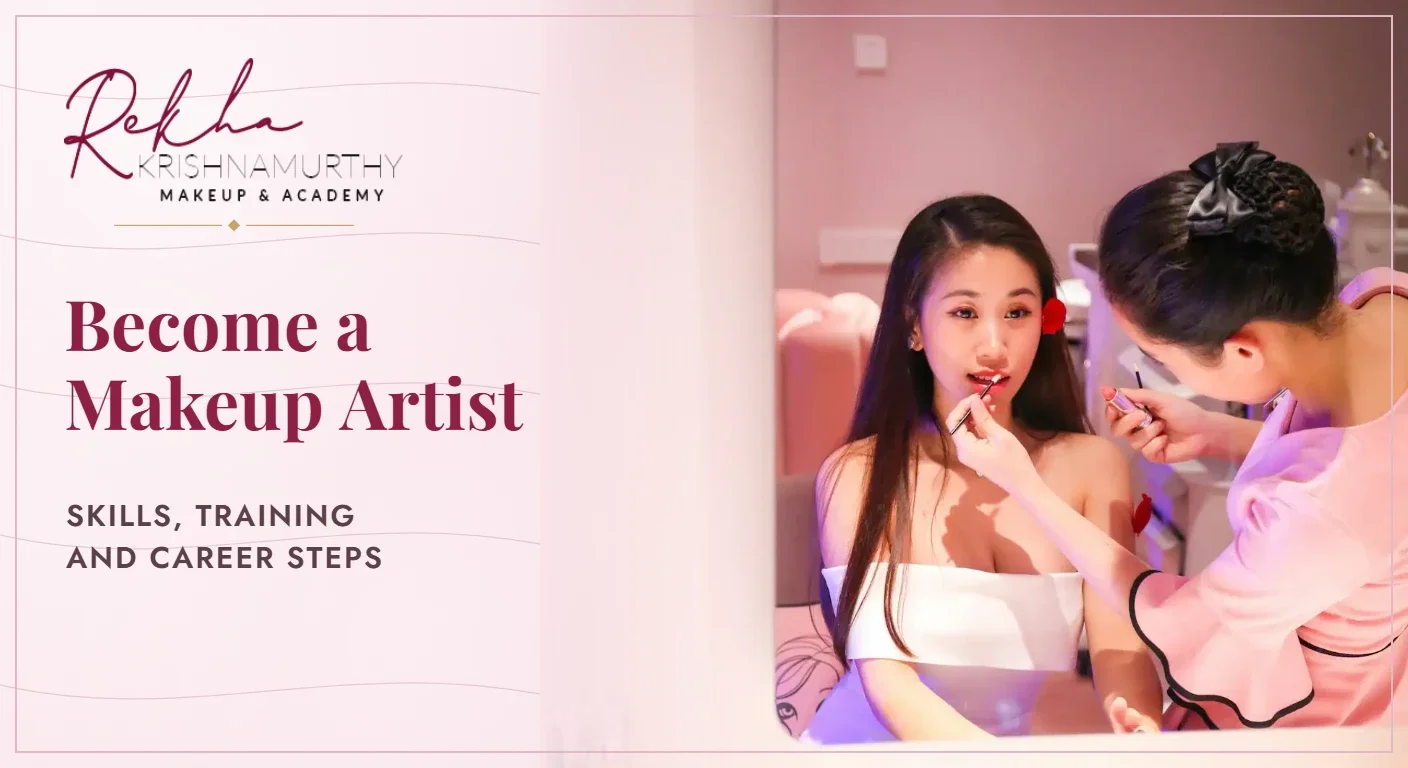
How to Become a Makeup Artist in India: Career Guide for 2027
Many people love makeup. Some do it for friends, watch tutorials for hours or dream of working at weddings and shoots. However, turning that passion into a career needs more than talent. If you want to become a makeup artist, you need skills, practice, a kit, a portfolio and a clear way to find clients.
This guide walks you through each step.
Step 1: Understand the Job
The job is far more than applying products. On a typical bridal day, for example, the artist:
- Plans the look with the client.
- Preps different skin types.
- Matches the base to the skin tone.
- Works fast under pressure.
- Keeps every tool clean.
- Handles hair and draping, or works with someone who does.
- Manages time across several functions.
So the job needs technical skill, people skills and calm under pressure.
Step 2: Learn the Core Skills
Next, build a strong base. The key skills include:
- Skin types and skin prep.
- Colour theory and colour correction.
- Foundation matching for many skin tones.
- Concealing, contour and highlight.
- Eye makeup, from soft to bold.
- Brows, lashes and lips.
- Bridal, party and camera makeup.
- Hygiene and kit care.
India has national standards for this job, too. For example, the National Qualifications Register lists a Professional Makeup Artist qualification from the Beauty & Wellness Sector Skill Council.
Step 3: Choose the Right Training
You can learn from videos. However, structured training saves time, because a trainer can correct you while you work.
When you compare courses, check:
- How many hours of hands-on practice you get.
- Whether you practise on real faces.
- Whether bridal, hair and draping are included.
- Whether the course covers pricing and business skills.
- Who teaches the classes.
In Bangalore, Rekha Krishnamurthy's Launchpad course runs for 20 sessions and 120 hours, from 11 AM to 5 PM. It covers makeup, bridal, occasion looks, hair, draping and professional development. The course fee is ₹1,50,000, and a certificate is given after successful completion and a final assessment.
Step 4: Practise on Many Faces
Practice is where skill grows. So work on friends, family and classmates with different skin tones, ages and face shapes.
Each new face teaches you something new about skin, colour and timing. For instance, deep skin tones need different colour correction from light ones. Similarly, mature skin needs lighter layers and careful setting.
Step 5: Build a Starter Kit
You do not need everything at once. Instead, start with a solid core:
- Skin prep basics and primers.
- Foundations in a wide shade range.
- Concealers and correctors.
- Powders and setting sprays.
- Eyeshadow palettes, liners and mascara.
- Lashes and lash glue.
- Lip colours and liners.
- A full set of clean brushes and sponges.
Our professional makeup kit checklist goes into more detail.
Step 6: Create an Honest Portfolio
Your portfolio is how clients judge you. So photograph your work in good, natural light. Show close-ups. Show many skin tones. Above all, avoid heavy filters, because clients want to see real results.
Also, ask for honest feedback. A friend may say the look is lovely, while a trainer will point out a harsh blend or a shade that is slightly off. That feedback is what helps you improve.
Step 7: Learn the Business Side
Many skilled artists struggle because they skip this step. You need to know:
- How to price your services.
- How to take bookings and advances.
- How to write clear terms.
- How to talk to clients before and after the event.
- How to use social media well.
- How to keep records and manage time.
Step 8: Keep Hygiene Non-Negotiable
Clients trust you with their skin and eyes. So clean brushes, single-use applicators and clean products are essential. The US FDA's guide to using cosmetics safely is a good reminder of the basics.
How Long Does It Take?
It depends on your starting point and practice time. A structured course gives you the foundation in weeks or months. However, real confidence comes from steady practice over the following year.
Frequently Asked Questions
Do I need a degree to become a makeup artist in India?
No degree is required. However, structured training and a recognised certificate help you learn faster and build trust with clients.
Can I start a makeup career after 30 or 40?
Yes. Many artists start later in life. What matters most is training, practice and a professional approach.
How much does a makeup course cost?
It varies by length and content. Rekha's 120-hour Launchpad course costs ₹1,50,000, and her 60-hour bridal programme costs ₹1,00,000.
Is makeup a good career in India?
It can be, especially in bridal and event work. Success depends on skill, reputation, hygiene and how well you run the business side.
Start Your Makeup Career
If you are ready to start, the right training makes all the difference. Explore Rekha's Professional Makeup Artist Launchpad or the full makeup academy, then ask about the next batch.